Speakers FIT 2021
Andres Knobel
David Bradbury
Sergio Martin Paez
Julia Strada
Sarah Perret
David Agrawal
Jorge Atria
Dario Rossignolo
Nestor Castaneda
Daniel Artana
Dina Pomeranz
Alberto Barreix
Agustin Redonda
Dalmiro Morán
Fernando Peláez Longinotti
Juan Pablo Jiménez
Juliana Londoño Vélez
Ricardo Martner
Tax Justice Network
Andres Knobel
Organization for Economic Cooperation and Development (OECD)
David Bradbury

David Bradbury is the Head of the Tax Policy and Statistics Division of the Centre for Tax Policy and Administration at the Organisation for Economic Co-operation and Development (OECD).
David is an Australian national and joined the OECD in April 2014, where he now leads a team of economists, lawyers and statisticians who are focused on delivering high quality economic analysis and tax policy advice, and providing internationally comparable tax data and statistical analysis.
As a member of the management team at the Centre for Tax Policy and Administration, David was a key contributor to the delivery of the OECD/G20 Base Erosion and Profit Shifting (BEPS) Project and its implementation. He has also led the OECD’s involvement with the Task Force on the Digital Economy and led the team responsible for delivering the interim report on the Tax Challenges Arising from Digitalisation to G20 Finance Ministers.
Prior to joining the OECD, David was a lawyer, a Member of the House of Representatives in the Australian Parliament, and a Minister in the Australian Government.
As a lawyer, David worked for an international corporate law firm, specialising in taxation law.
He served in the Australian Government as the Assistant Treasurer, Minister for Competition Policy and Consumer Affairs, Minister Assisting for Financial Services and Superannuation, and Minister Assisting for Deregulation.
As a Minister, David led the Australian contribution to the debate on BEPS and implemented key taxation reforms including landmark amendments to the General Anti-Avoidance Rule – Part IVA – and the modernisation of Australia’s transfer pricing laws.
David has completed an undergraduate degree in Arts (majoring in Government and Public Administration), an Honours degree in Law, and has completed post graduate studies in Taxation Law at the University of Sydney.
:https://www.taxpolicycenter.org/event/prescription-fiscal-policy-covid-19-economy-david-bradbury
UFRJ – Federal University of Rio de Janeiro
Sergio Martin Paez

PhD in Economics from the Federal University of Rio de Janeiro and collaborator at the Latin American Strategic Center for Geopolitics (CELAG). Specialist in wealth taxation in Latin America, having published a study on the estimated collection of Tax on Great Fortunes in Latin America. ¿Cuánto podría recaudar el impuesto a las grandes fortunas en América Latina?
:https://www.celag.org/cuanto-podria-recaudar-el-impuesto-a-las-grandes-fortunas-en-america-latina/
Center for Argentine Political Economy (CEPA)
Julia Strada
Director of the Argentine Political Economy Center (CEPA) and PhD in Economic Development. She has recently published a report on the panorama of the Tax on Great Fortunes in the world and its perspective for Argentina: “Impuesto a los grandes patrimonies: Propuestas en Europa y América del Sur y debate sobre proyectos en la Argentina”
:https://centrocepa.com.ar/informes/250-impuesto-a-los-grandes-patrimonios-propuestas-en-europa-y-america-del-sur-y-debate-sobre-propuestas-en-argentina-en-el-contexto-de-la-pandemia-de-covid-19.html
Organization for economic cooperation and devolopment (OECD)
Sarah Perret
Deputy head of the Department of Tax Equity and Social Inclusion of the Center for Tax Policy and Administration of the OECD. Author of numerous studies on inheritance and wealth taxation, having organized a major report on the wealth tax situation in OECD countries in 2018: The Role and Design of Net Wealth Taxes in the OECD.
:https://www.oecd.org/tax/the-role-and-design-of-net-wealth-taxes-in-the-oecd-9789264290303-en.htm
University of Kentucky
David Agrawal
Professor at the University of Kentucky. PhD in Economics from the University of Michigan. He has several publications on tax havens, tax evasion, transfer of profits and taxation of digital services. He is co-author of the paper “Paraísos Fiscales, Wealth Taxation, and Mobility”
:https://papers.ssrn.com/sol3/papers.cfm?abstract_id=3676031
Centre for Social Conflict and Cohesion Studies (COES)
Jorge Atria
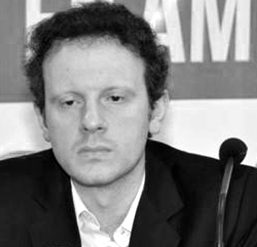
Researcher at the Center for Studies in Social Conflicts and Coexistence (COES) and professor of sociology at Diego Portales University. PhD from the University of Freie, Berlin, with research on tax evasion in Chile. His line of research is based on economic and fiscal sociology, focusing on inequality, taxation and social structure. Co-editor of the book “Repensando Tributação na América Latina: reformas e desafios em época de incerteza”(Rethinking Taxation in Latin America: Reforms and Challenges in Times of Uncertainty
:https://coes.cl/publicaciones/rethinking-taxation-in-latin-america-reforms-and-challenges-in-times-of-uncertainty/
Buenos Aires University and CEQ
Dario Rossignolo
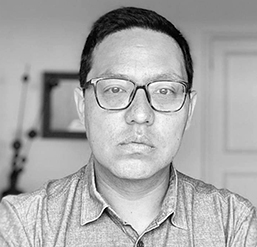
PhD in economics from the National University of La Plata and professor of Macroeconomics and Public Finance at the University of Buenos Aires. Researcher at the Commitment to Equity Institute, having also worked at the UN, World Bank, IDB, OECD, International Labor Organization, ECLAC and UNICEF. One of his most relevant publications was the co-authorship of a report entitled “The taxation of high incomes in Latin America”, published by ECLAC/UN
:https://www.cepal.org/es/publicaciones/35896-la-tributacion-altas-rentas-america-latina
University of London (ULC)
Nestor Castaneda

Professor of Latin American Economics at the University College of London and PhD in Political Science from the University of Pittsburg. Specialist in tax policy and inequity in Latin America, including electoral and political impacts. Author of “Business Groups, Tax Efficiency, and Regressivity in Colombia”.
:https://link.springer.com/chapter/10.1007/978-3-319-60119-9_7
Foundation for Latin American Economic Research (FIEL)
Daniel Artana

PhD in Economics from the University of California. He is chief economist at the Latin American Economic Research Foundation (FIEL) and full professor of Economic Policy at the National University of La Plata. Specialist in impact analysis of tax incentives in Latin America. Co-author of the book “La eficacia de los incentives fiscales: El caso de las zonas francas de exportación de Costa Rica, El Salvador y República Dominicana” (BID).
:https://publications.iadb.org/publications/spanish/document/La-eficacia-de-los-incentivos-fiscales-El-caso-de-las-zonas-francas-de-exportaci%C3%B3n-de-Costa-Rica-El-Salvador-y-Rep%C3%BAblica-Dominicana.pdf
University of Zurich and IGC
Dina Pomeranz
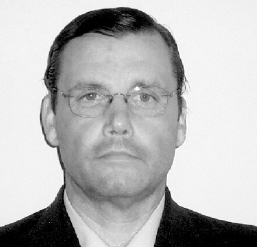
Professor of Economics at the University of Zurich and researcher in the field of public policy and taxation in developing countries. She holds a postdoctoral degree from the MIT Poverty Action Laboratory. Member of the International Growth Center (IGC), the European Economic Association and the Board of Directors of the International Institute of Public Finance. She has recently published the article “Challenges of Monitoring Tax Compliance by Multinational Firms: Evidence from Chile”
:https://www.aeaweb.org/articles?id=10.1257/pandp.20191045
Chief Fiscal Economist at the Inter-American Development Bank (IDB)
Alberto Barreix
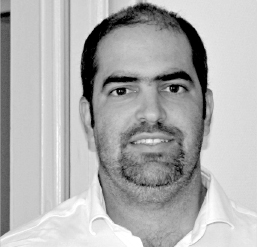
Alberto Barreix, Fiscal Principal Leader at the Inter-American Bank (IADB), as leading advisor for tax policy and administration reform projects in several countries of the region. He was a lecturer on Public Finance in Open Economies at the John F. Kennedy School of Government and the Deputy Director of the Program on Revenue Forecasting at Harvard University. Previously, Mr. Barreix headed the Department of Fiscal Policy and Statistics at the Ministry of Finance (Internal Revenue Service) of Uruguay. He holds a M.P.A. and a Ph.D. from Harvard University.
OECD Consultant on Tax Policy and Taxation
Agustin Redonda

Agustin Redonda is a Senior Fellow with the Council on Economic Policies (CEP) where he leads the fiscal policy program. Prior to that he has been a research and teaching assistant with the Economics Department (IdEP) of the University of Lugano (USI). He also worked with the Organisation for Economic Co-operation and Development (OECD), as well as for the Ministry of Labour, Employment and Social Security (MTSS) in Argentina. Agustin holds a PhD in Economics from the University of Lugano, a MSc in Economics from University Paris I – Panthéon Sorbonne, a MSc in Economics from University Paris – Est Créteil, and a BA in Economics from the University of Buenos Aires (UBA).
Economist and author of studies on tax policy in Latin America, published by ECLAD, ILO and other institutions
Dalmiro Morán

Economist and international consultant specialized in tax and public revenue policies. Author of numerous studies on tax policy in Latin America, which have been published by organizations such as the Economic Commission for Latin America and the Caribbean (ECLAC), the Inter-American Center of Tax Administrations (CIAT), the International Labor Organization (ILO), among others. Postgraduate professor in courses on taxation (University of Buenos Aires) and speaker at international seminars and congresses on different aspects of the subject.
Economist at the General Directorate of Taxes of Uruguay and Collaborator at the Inter-American Center for Tributary Administrations (CIAT)
Fernando Peláez Longinotti

Consultant expert in Tax Expenditure research
Fernando Peláez collaborates as a consultant for CIAT in various topics related to collection statistics, evasion studies and tax expenditures, as well as a teacher of the Course on Tax Estimates of this institution.
He is a Public Accountant in Uruguay, all his training was made in the national system of public education of his country. He has a Masters in Tax Administration and Public Finance from the Institute of Fiscal Studies / UNED and has directed his training towards study and research in matters related to the design and evaluation of the tax system.
He currently directs the Department of Economic-Tax Studies of the General Tax Directorate (Uruguayan tax administration). This area is in charge of the projections and monitoring of the national tax collection, the analysis of the performance, the impact examinations of the reforms or adjustments that are proposed to the system, as well as the preparation of evasion and expenditure studies, among others. In the academic field, he is a teacher in the Master’s Degree in Taxation at the University of the Oriental Republic of Uruguay, where he is responsible for the subject Design and Evaluation of Tax Systems.
Former coordinator of the fiscal area of ECLAC's Economic Development Division and consultant to several organizations (IBRD, IMF, IDB, UNDP and UNICEF)
Juan Pablo Jiménez

Juan Pablo Jiménez is Professor of “Budget and Financing of Public Policies” at the Latin American Faculty of Social Sciences (FLACSO)-Buenos Aires; Researcher and Founding Member of the Ibero-American Association of Local Financing (AIFIL); Visiting Researcher of the TRANDES Program of the Free University of Berlin and of the International Centre for Economic Development (ICER) of the University of Torino.
He was Director of the Office of the Economic Commission for Latin America and the Caribbean (ECLAC) in Uruguay and coordinator of the fiscal area of the Economic Development Division of ECLAC, Santiago de Chile, worked at the Ministry of Economy and the National Congress of Argentina, at the Fiscal Affairs Department of the International Monetary Fund (IMF) as Visiting Professor and at the School of International and Public Affairs (SIPA) of Columbia University in New York as Professor. He has been a consultant to numerous organizations including the World Bank, International Monetary Fund (IMF), Inter-American Development Bank (IDB), Inter-American Center of Tax Administrations (CIAT), UNDP, UNICEF.
He is the author of numerous books, articles and publications on economic development, fiscal policy, taxation, social policies, inequality, fiscal federalism and decentralization. He holds a B.A. in Economics from the University of Buenos Aires, an M.A. in Public Policy from Columbia University and an M.A. in Economics from the Di Tella Institute.
Economist at the University of Califórnia (UCLA) and the National Bureau of Economic Research (NBER)
Juliana Londoño Vélez

Juliana is an Assistant Professor of Economics at the University of California, Los Angeles, and a Faculty Research Fellow at the National Bureau of Economic Research. Her work primarily focuses on inequality and redistributive tax and transfer policies, with a special interest in developing countries.
He was Chief of Fiscal Affairs at ECLAC and UN economist for over 30 years
Ricardo Martner
Ricardo Martner, Born in Santiago, Chile, is now an independent economist, after serving in the United Nations for more than 30 years. As Chief of the Fiscal Affairs Unit of CEPAL/ECLAC, he was in charge of the dissemination and discussion of the Addis Ababa Action Agenda in Latin American and Caribbean Countries, and organized the CEPAL Fiscal Policy Seminar for 15 years.
Visiting Professor of Economics and Public Finance in many Latin American Universities, his research interests include income distribution and other inequality issues, macroeconomics, budgeting, debt dynamics and of course tax policy and international cooperation on tax matters. He has collaborated in many United Nations reports and authored and co-authored many books and articles.